Positioning
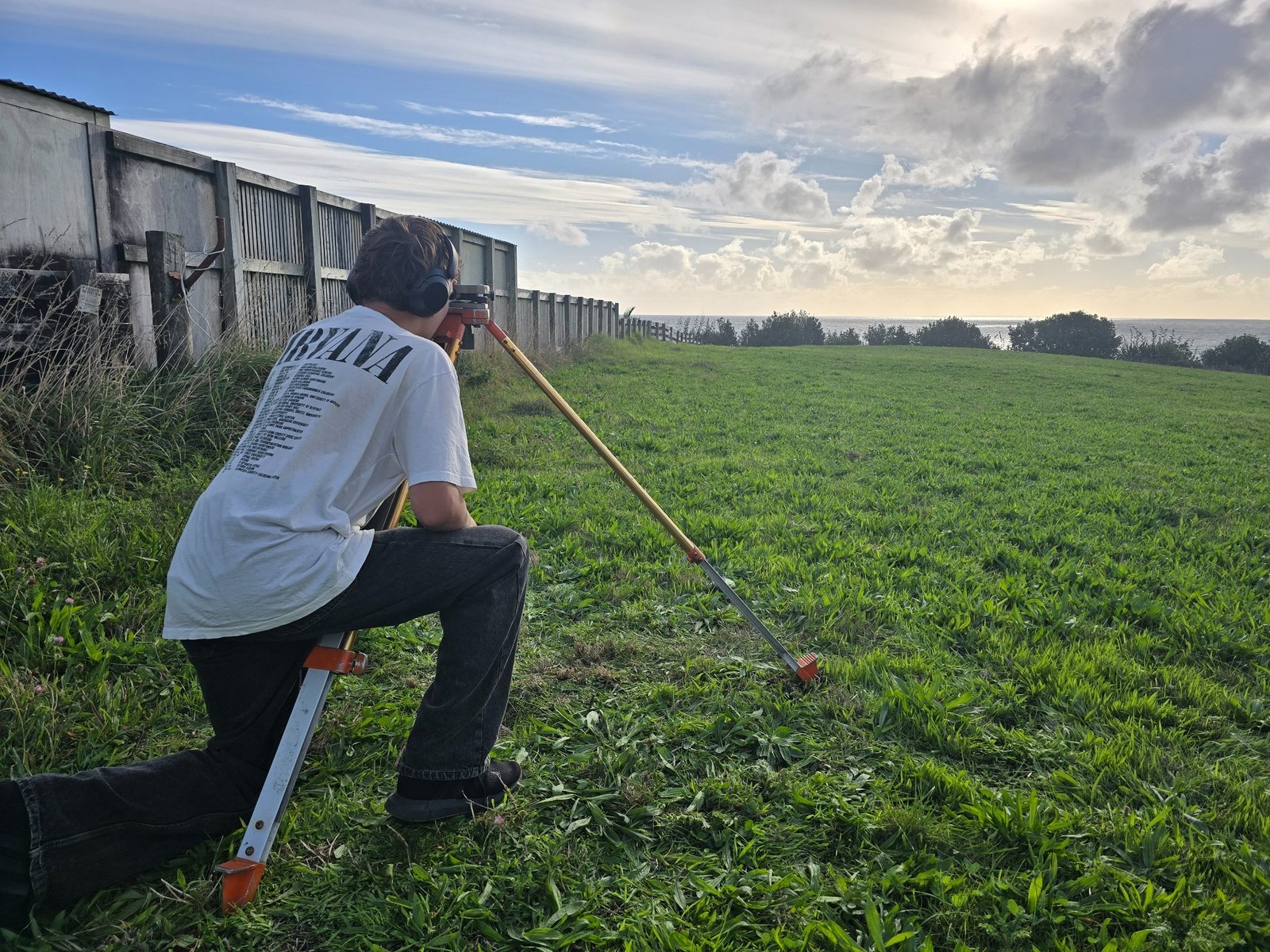
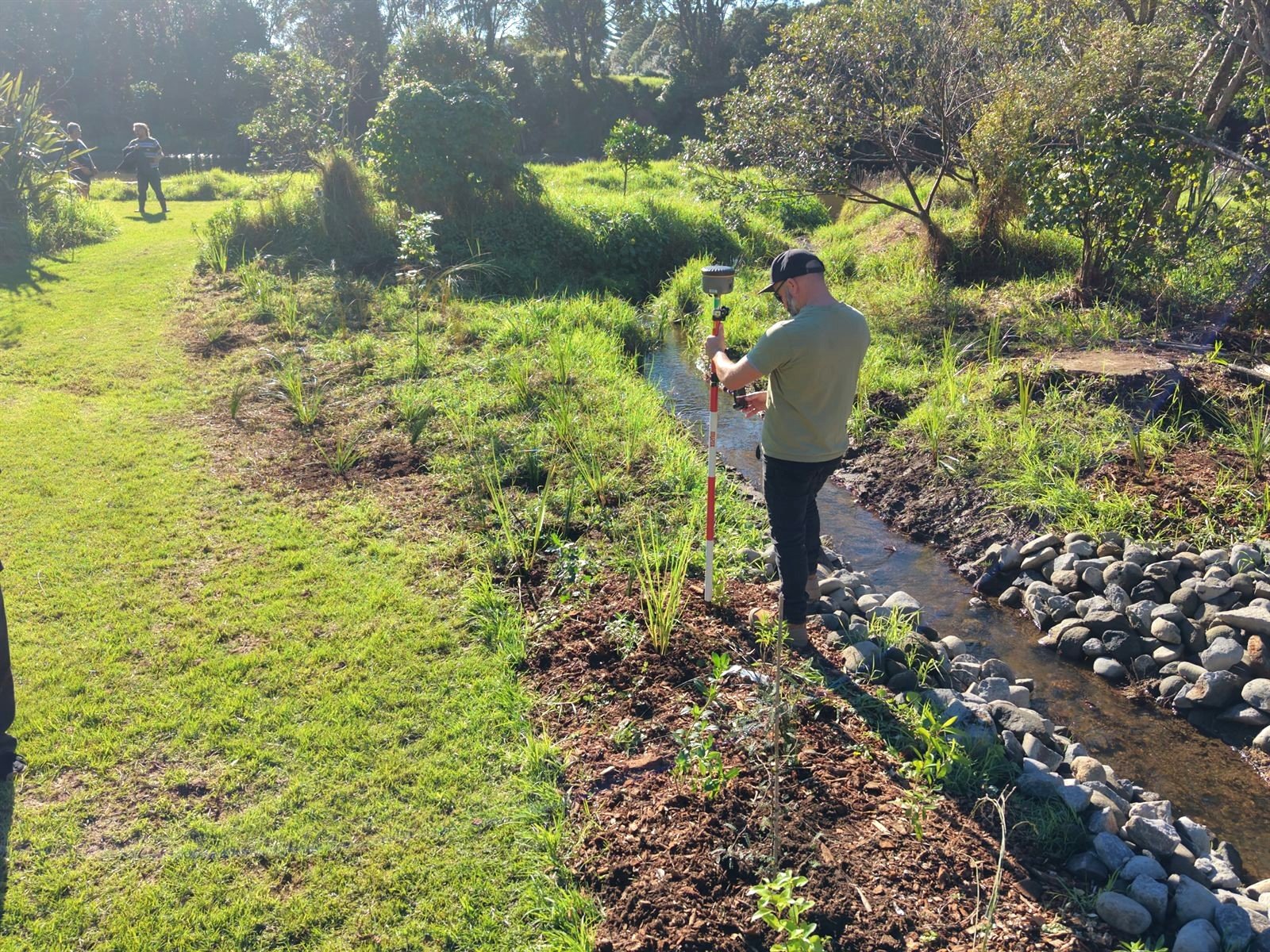
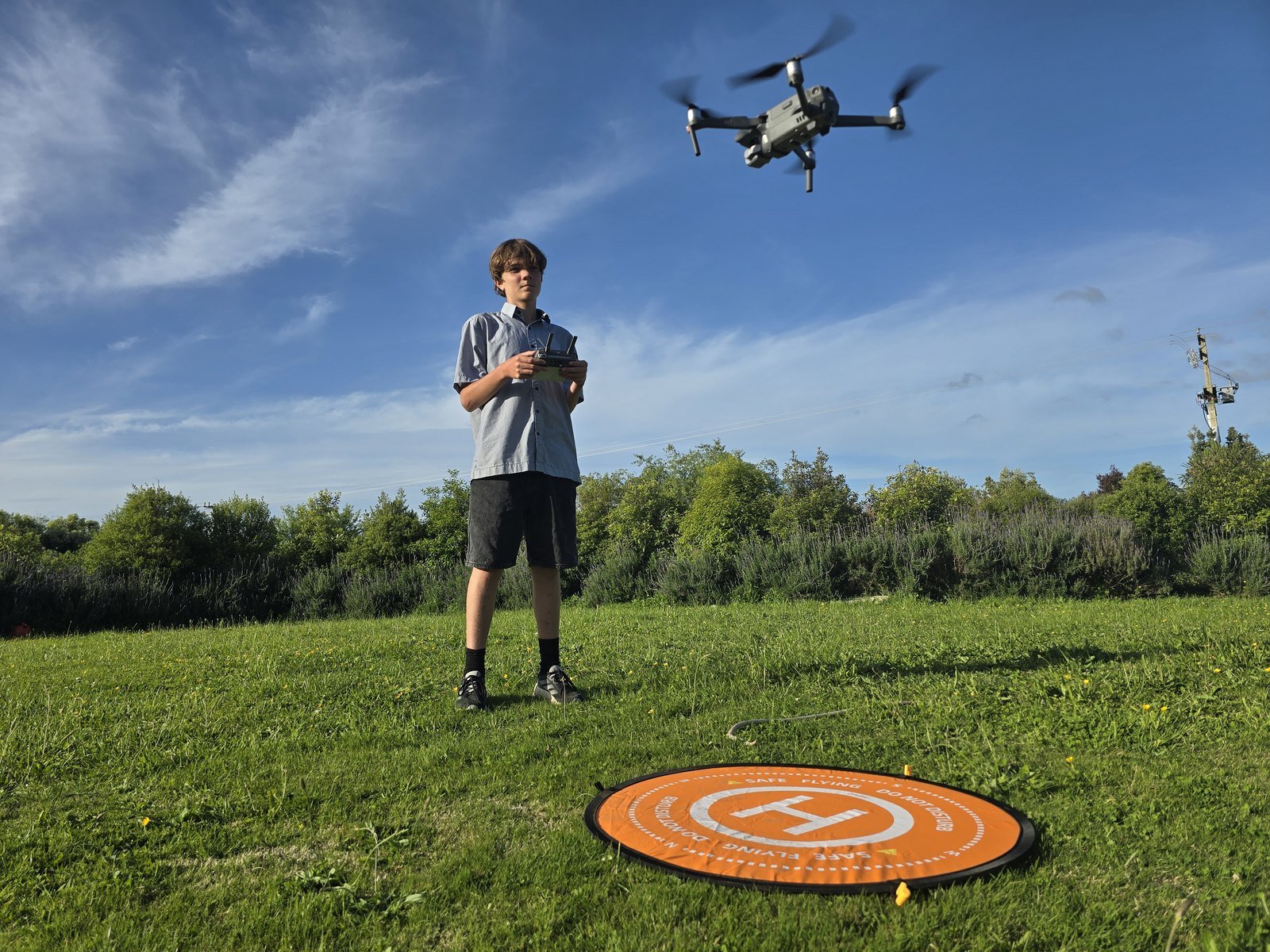
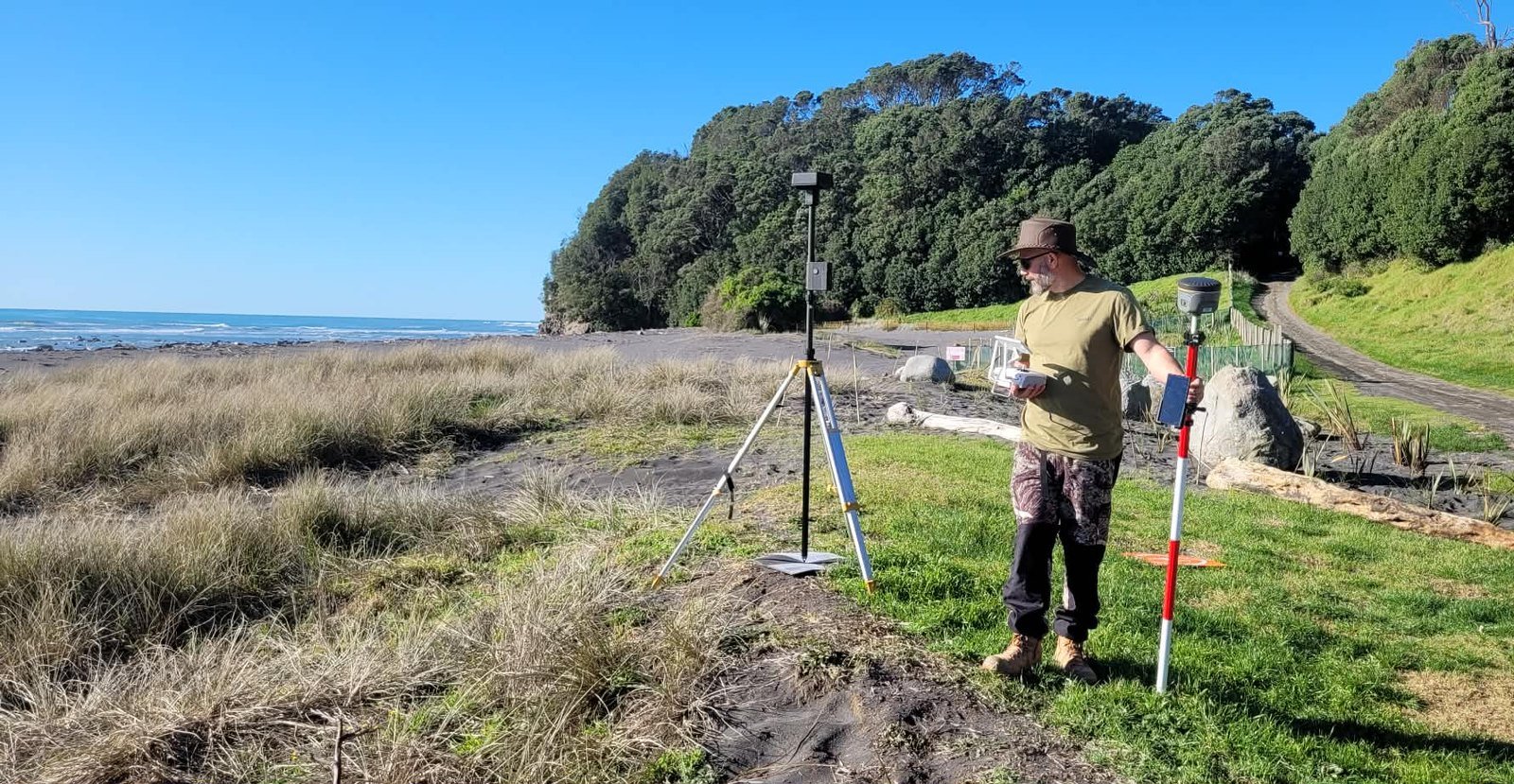
We run two GNSS RTK base and rover setups. In flight, the drone takes RTK corrections from a correction service over the mobile network or from our own base on site, which gives strong relative accuracy. Ground control points tie everything into the New Zealand coordinate system: NZTM2000, with NZVD2016 heights.
Ground control points, or GCPs, are targets we lay out and survey with the rover before a flight. They show in the photos, so when the images are stitched together the map is pinned to measured eastings, northings and heights. A few more points held back as checks are how we verify the accuracy of each job, rather than assume it. Every job comes with a short accuracy report showing those points and how closely the map matches each one.
No mobile signal on site? We record the raw positions and correct them afterwards instead (post-processed kinematic, or PPK), which gives the same accuracy without a live connection.
When small changes matter, such as erosion along a coast or river bank, or any site we fly again and again to compare in software, we set up our own DJI D-RTK 2 base station right beside the job. A base a few metres away, rather than one many kilometres off at the correction service, gives the tightest and most repeatable results.
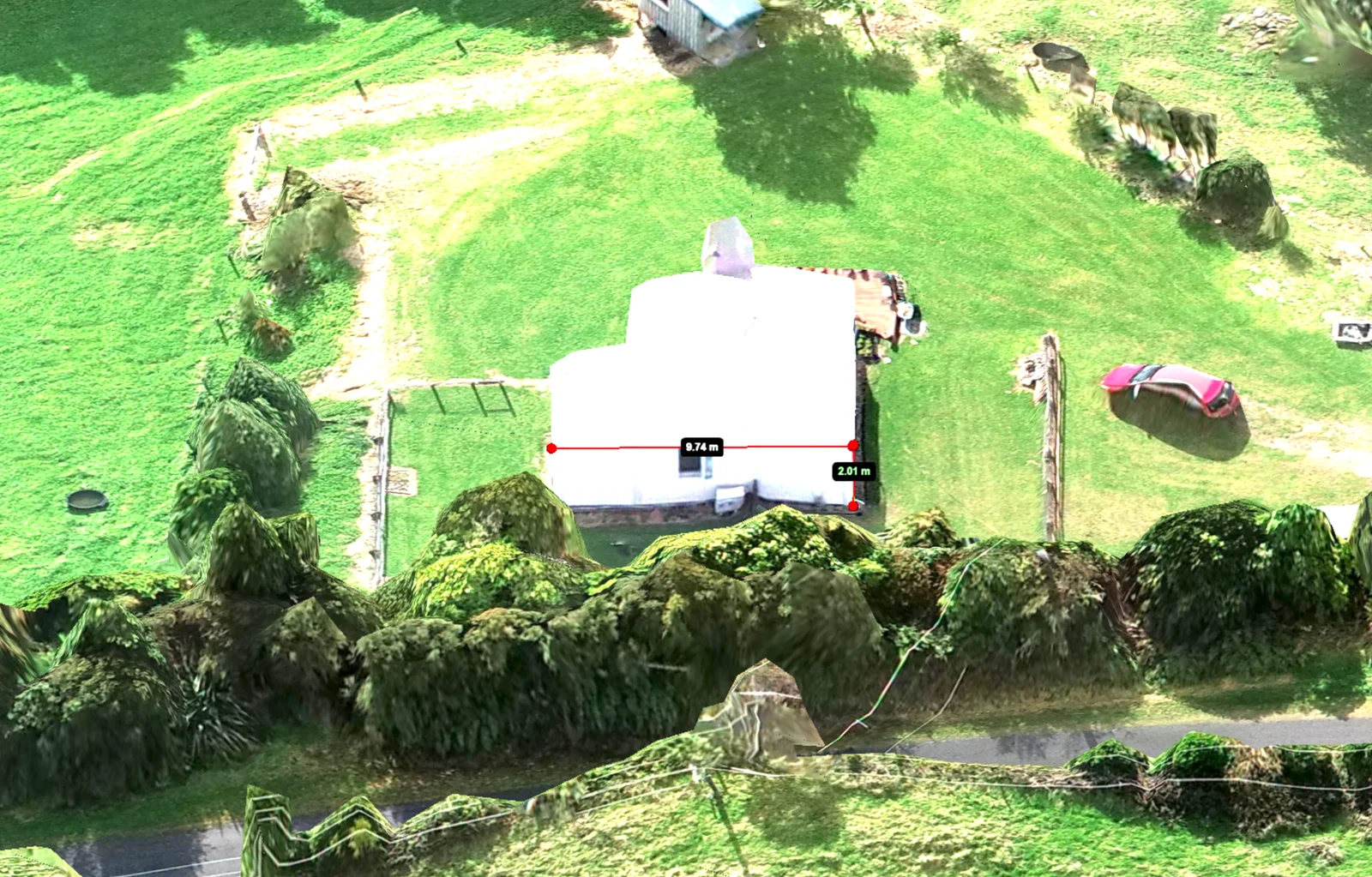
The rover also picks up as-built features — pipes, drains and services before a trench is backfilled. Files come in whatever format your GIS, CAD or engineering software needs. This is not cadastral surveying — Geomap NZ does not do boundary or cadastral work, and our data is for information, not for defining legal boundaries.